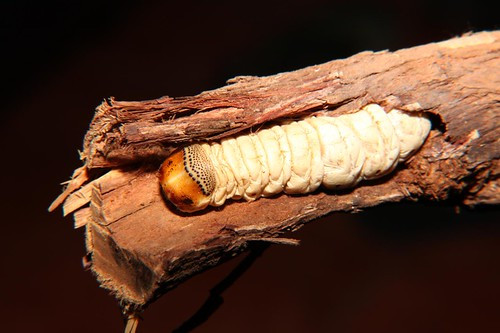
Often requested is the elusive witchetty grub which, although they can be found in the Witchetty Bush, not every bush has them.
The witchetty grub (Witjuti) is the larvae of the large grey cossid moth ( Endoxyla leucomochla ). The larvae can grow to 6 cm or longer and is found mainly in the woody roots of the witchetty bush ( Acacia kempeana) between November and January.
Rich in protein they taste like almonds.
They also form part of the outback medicine cabinet as crushed witchetty grubs can be spread over injuries, burns and wounds to expedite healing.
The Witchetty Bush is a large rounded shrub growing to 4m in height with bright yellow, perfumed flower spikes appearing in late spring or after rain. The seed pods which follow attract large numbers of cockatoos, particularly galahs and red-tailed black cockatoos.
Acacia kempeana, also known as Witchetty Bush, thrives in arid and semi-arid regions with well-drained soils and full sun. It is a hardy species, tolerant of drought and light frost. Ideally, it prefers well-drained soils, including sandy, loamy, or even stony soils, and can be found in various soil types in its natural habitat.
Sunlight: Full sun is ideal for Acacia kempeana.
Soil: Well-drained, including sandy, loamy, or stony soils.
Water: It’s drought-tolerant, but regular watering during establishment and in very dry conditions is beneficial.
Climate: Well-suited to arid and semi-arid environments and can tolerate light frost.
Named after Pastor Freidrich Kempe, co-founder of the Lutheran mission at Hermannsburg (A mission that operated for 150 years).
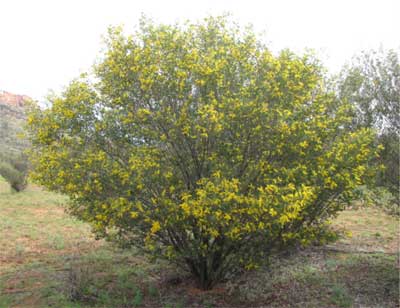
The Witchetty Bush is found throughout the Desert Rivers and Woodland habitats. It was planted prolifically in the early days of the Alice Springs Desert Park to provide screening and background foliage cover as it is quite quick growing.
NOTE: You may be familiar with the white curl grubs infesting your garden and causing havoc to a beautiful lawn. They are NOT witchetty grubs even though they are similar in appearance. Leave them for the birds to dig out of the lawn.
 Bush Food Garden